

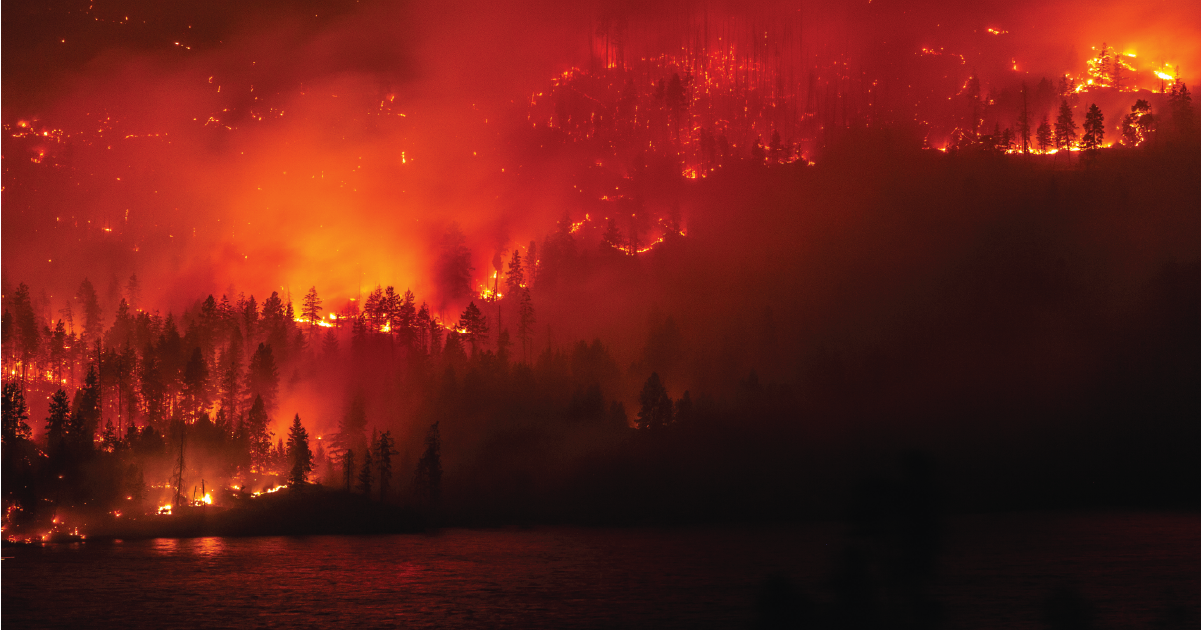
As long as humans have walked the earth they’ve been at the mercy of Mother Nature. Today, advancements in technology have helped us to mitigate the effects of her wrath by giving us the ability to often predict—to a certain extent—when and where a disaster may strike. However, a warning only helps if those being alerted choose to listen.
Imagine emergency radio and television broadcasts informing residents of the southwest that a Category 5 hurricane was blowing their way, or the wail from hundreds of sirens in Hawaii attempting to alert people about a screaming tsunami that’s nearing the islands. Now, imagine no one seems to care.
This is how millions of people view the collective inaction to address climate change—and it might be starting to have a detrimental effect on their mental health.
“People have always been worried about dangers emanating from the natural environment,” says Christoph Leonhard, Ph.D., faculty in The Chicago School of Professional Psychology’s Department of Clinical Psychology. “And worries about the adverse effects of environmental events have always caused mental health distress—both in anticipation of such events and subsequent to their occurrence. However, the fear of global warming is quite recent.”

In the late aughts, the term ecoanxiety began to gain prevalence as a way to describe the mental health impact people were feeling in relation to greater awareness about the negative effects of our changing climate.
A 2014 report by the American Psychological Association (APA), Beyond Storms & Droughts: The Psychological Impacts of Climate Change, references the term, stating that “qualitative research does find evidence of some people being deeply affected by feelings of loss, helplessness, and frustration due to their inability to feel like they are making a difference in stopping climate change.”
However, ecoanxiety is not currently recognized as a diagnosable condition by either the World Health Organization or by the American Psychological Association, “rather it is a term coined in the last couple of years at the nexus of mental health journalism and environmental activism to describe the discomfort some, especially young people, feel when considering possible future environmental degradation,” Dr. Leonhard says. He cites environmental activist Greta Thunberg saying that she wants folks to panic about the environment as an example of how the terminology is better leveraged for political purposes than clinical diagnosis. “The way it is written about, I’m not sure there is any goal to mitigate its potential mental health effects.”
In this context, those interested in aggressively pursuing action on climate change hope to trigger a fight-or-flight response by underscoring the potential negative consequences we will face. They want you to feel anxiety because it may be the only way to spark immediate action.
On the flip side, those who deny or disagree with the science around climate change can use the rise of non-clinical terminology to mock an entire generation as overreacting. Conservative writer Michael Hewitt argues that “people suffer anxiety and stress regardless of the stability of the Arctic ice shelf” in a piece for The Independent.
Nevertheless, in a follow-up report in 2017, the APA decided to use the term ecoanxiety in nine separate instances, seemingly cementing its use in public discourse— Google Trends shows a steady increase in searches related to ecoanxiety ever since.
When people say they are worried about climate change, often they are really worried about the most problematic symptoms of climate change: natural disasters. And nearly every country in the world agrees they will increase in frequency as the climate continues to warm. Studies show that individuals who survive one of these events are more prone to chronic stress, substance abuse, anxiety, depression, and PTSD.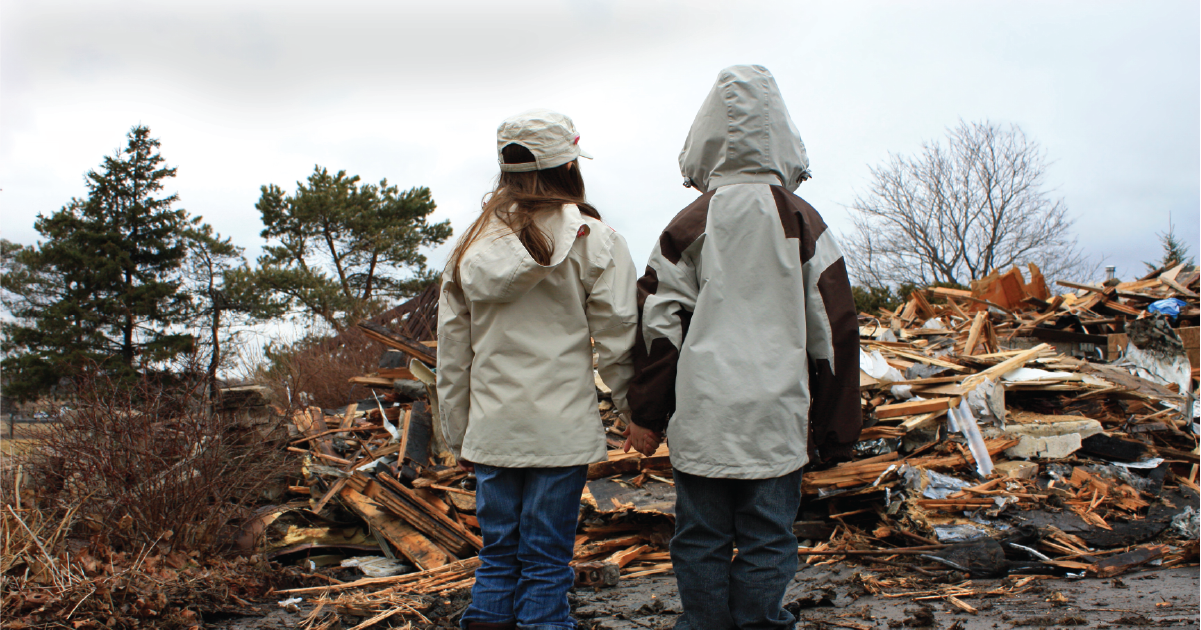
“A natural disaster can come out of the blue, and the lack of control is one of the things that makes these events so debilitating,” says Clive Kennedy, Ph.D., a clinical psychologist and faculty member in The Chicago School Department of Forensic Psychology. “People are encouraged to inject some level of control to combat feelings of helplessness and futility. Understanding the nature of the event and having a plan to cope with the scenario will facilitate the resilience of those exposed to environmental disaster.”
In addition to preparedness for individual events, such as boarding up windows for a hurricane, there are also proactive steps people can take to alleviate stress directly related to climate change as a slow-moving ecological event. For example, the APA points out that choosing to physically commute, such as biking or walking, “directly impacts depression, anxiety, PTSD, and other mental illnesses.” Additionally, your newly reduced emissions footprint can further boost your mental health with the knowledge that you’re an active contributor toward a solution. Even making the switch to public transit was found to have similar effects.
But for greater impact, governments at local and national levels must also be proactive. Initiatives like increasing green spaces and furthering the use of clean sustainable energy sources can support physical and mental health at a community level. Sponsoring events like public beach or park cleanups can offer individuals more opportunities to feel like they are contributing as well.
Even if all greenhouse gas emissions stopped tomorrow, it is likely too late to stop some negative impacts of climate change—California has already seen a 500 percent increase in the size of wildfires and low-lying communities are already at increased risk for flooding. Communities should be ready to respond and provide the proper mental health care for the public at large when disaster inevitably strikes.
These initiatives can provide more on-ground support to affected individuals, including the first responders, whose mental health is not always top of mind.
One suggestion to enhance current response measures could come in the form of increasing the number of mental health professionals involved with disaster response teams. “I think within the professional field of mental health, initiatives such as joining with agencies like the Red Cross to assist communities after an incident would be a great thing,” Dr. Kennedy says. “These initiatives can provide more on-ground support to affected individuals, including the first responders, whose mental health is not always top of mind.”
Hurricane Katrina stands as a stark reminder for how response coordination is essential to mitigate impacts on community mental health. The Chicago School launched a Psy.D. in Clinical Psychology program in partnership with Xavier University of Louisiana in part to help respond to rises in mental illness and a lack of qualified professionals following the hurricane. “In addition to losing homes, churches, schools, and neighborhood social networks, many individuals also suffered PTSD due to the trauma of the storm and its aftermath. Many also had depression and loss of hope for the future,” Dr. Leonhard says.
These effects cannot be completely eradicated, but through preparation and cooperation, communities can better support preventative measures and treatment options.
While terms like ecoanxiety may not be officially recognized as a diagnosable mental illness, its rise in public discourse is representative of our innate desire for a feeling of safety and control. However, it’s worth pointing out that the problem with anxiety as a motivator of human action is that it often leads to avoidance instead of helpful measures. By taking definitive steps to address the issue of climate change, we can better achieve this while simultaneously reducing the chance of natural disasters and their negative impact on our mental health.
Learn more about The Chicago School
To learn more about academic programs at The Chicago School of Professional Psychology, fill out the information below to request more information. You can also apply today through our application portal here.