

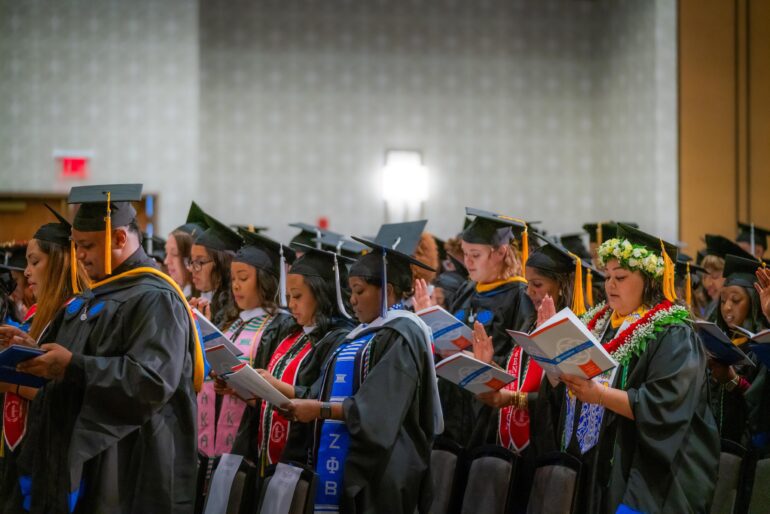
The Chicago School’s Alumni Ambassador program is a universitywide initiative to strengthen alumni engagement, support prospective students, and foster professional connections across Canada. Three volunteer ambassadors were chosen after a competitive search, and all are committed to sharing their experiences with current and prospective international students and offers insight about study in the United States.

Goldi Gill, Ph.D., is Assistant Deputy Minister of the Health Workforce Division with the Government of Alberta, where she provides strategic leadership for strengthening Alberta’s health workforce. Her responsibilities span health professional compensation and regulation, workforce strategy and planning, and the development and sustainability of the province’s health workforce. The division works closely with health professionals, regulatory bodies, and sector partners to support a responsive, sustainable workforce that meets Alberta’s evolving health system needs.
Sandra Dennis, Ph.D., is leading expert on the use of peacekeeping forces in the Global South. She has received a research grant from the American Psychological Association (APA), has presented her findings in more than 20 countries on six continents and has published four of the five chapters of her dissertation as academic papers, with the fifth to be published soon.
Clinical psychologist Wolf Steger, Psy.D., always knew he wanted to prioritize practice over research and would like to see more opportunities for clinical training through Psy.D. programs in his home country. Steger is the clinical lead at the Operational Stress Injury Clinic in Toronto, part of a national network of clinics that exclusively serve active-duty Canadian Armed Forces (CAF) members, Canadian Veterans, and members of the Royal Canadian Mounted Police (RCMP).
What The Chicago School Offers for International Students
Each of The Chicago School ambassadors had specific parameters in what they were looking for in a graduate program and clear ideas about what they planned to study. After completing an MBA degree in Canada Dr. Gill was looking for Ph.D. program in business to gain a better understanding of how people work and think in workplaces. She found that the professors at The Chicago School understood working professionals and the coursework was manageable for someone who was organized in their time management. “That’s why I chose The Chicago School,” she says. “All in all, it was really a great fit.”
Having received two degrees from Canadian universities, Dr. Dennis was looking for a new perspective and says she experienced greater diversity in the student population than she had in her Canadian courses. Her cohort included students from China to Nigeria. “I appreciate how that broadened my perspective on the world, on research and study, and so much more,” she says. “It was an excellent experience for me.”
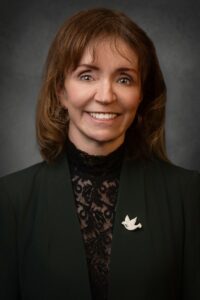
Dr. Steger knew when he entered graduate school that he wanted to practice in specialized clinical settings with first responders and military populations and therefore was convinced the Psy.D. degree the right degree for his goals. Because Canada has a limited number of Psy.D. programs—something that Dr. Steger is passionate about advocating to change—he decided his best avenue was studying in the United States, highlighting the unique training opportunities at The Chicago School with the above-mentioned populations. “My main concern was that when I did apply for residency back in Canada that I would be a competitive applicant, and that absolutely was the case,” he says.
How The Chicago School Supports Students Through Their Educational Journey
Dr. Gill credits her thesis adviser, Julie Benesh, Ph.D., with providing invaluable guidance throughout her doctoral journey. She also appreciated the support of other professors, who shared examples of relevant theses and publications and connected her with current and former students who could offer insight, advice, and encouragement.
“A Ph.D. can sometimes feel like a very individual journey because so much of the program is focused on you and your dissertation,” Dr. Gill says. “For me, having opportunities to connect with others, particularly in person, made a real difference. Those connections helped make the experience feel less isolating and reminded me that there was a community around me throughout the journey.”
Dr. Dennis says that the faculty at The Chicago School helped her “in a million different ways,” from critiquing her writing to providing her the structure to do her work with integrity. “I’m very proud of the work that I’ve done, but I feel like we did it together by collaborating in a collegial environment.”
Dr. Steger says the easiest way to express the level of support he received at The Chicago School is “I’m doing the exact work and I’m in the exact career right now that I always wanted to.” He has assumed leadership positions very early on in career, success he sees as partly the product of his training, his education, and his networking opportunities. “There’s no better proof than what I’m doing currently,” he says.
How The Chicago School Supports International Students
Having worked full time throughout her education, Dr. Gill was looking for a program that was accommodating of working professionals, which was difficult to find in Canada. “That was one of the areas that really drove my decision,” she says, as well as the availability of the professors to speak with potential students.
“I can’t thank the professors enough for all the work they did, including encouraging me to apply for the research grant through the American Psychology Association and for helping me get permission to do my research in South America,” Dr. Dennis says. “As you can imagine, I’m Canadian, I’m in an American university, and getting permission in place to do my research with a foreign military on another continent. It was a lot.”
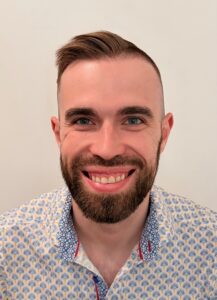
Dr. Steger was also impressed with how the staff at The Chicago School helped him navigate the visa process, which he says can change not just year by year but sometimes month to month. “I was studying at The Chicago School when COVID-19 happened,” he recalls. “To navigate the travel restrictions, it was important to have all my documentation in order and to consider numerous factors when determining when to travel. When there were questions, The Chicago School did a really good job of answering and being proactive. That reliability is invaluable for an international student.”
What Ambassadors Can Offer International Students
Having successfully navigated the rigors of completing degree programs at The Chicago School as international students, the university’s first alumni ambassadors are looking to illuminate the pathway for those who follow in their footsteps.
“The journey can feel long, and there may be times when the light at the end of the tunnel feels far away. My advice is to take it one step at a time, stay focused, and create a routine that works for you,” Dr. Gill says. “Remember that others have walked this path and understand the challenges along the way. Put yourself out there, ask questions, build relationships, and don’t be afraid to lean on the people around you. You don’t have to navigate the journey alone.”
Dr. Dennis says she is eager to share the very positive experience she had while pursuing her degree. “Getting a Ph.D. can be a long and lonely journey,” she says, “but I found no difficulty being able to contact and get responses or collaborating with professors there. Just being open, available, and willing to seek help opened so many avenues for me and for other students who were willing to do that.”
Dr. Steger is grateful for the opportunity to give back to the community. “As someone who lived in Chicago for six years, went through the program, and is now practicing in Canada, I will be able to help individuals navigate questions about practicum experiences, courses, crossing the border on a visa, going back to Canada for residency, and then becoming a fully licensed clinical psychologist in Canada,” he says. “I’ll be able to speak to that.”